
When an organisation replicates the very thing it decries
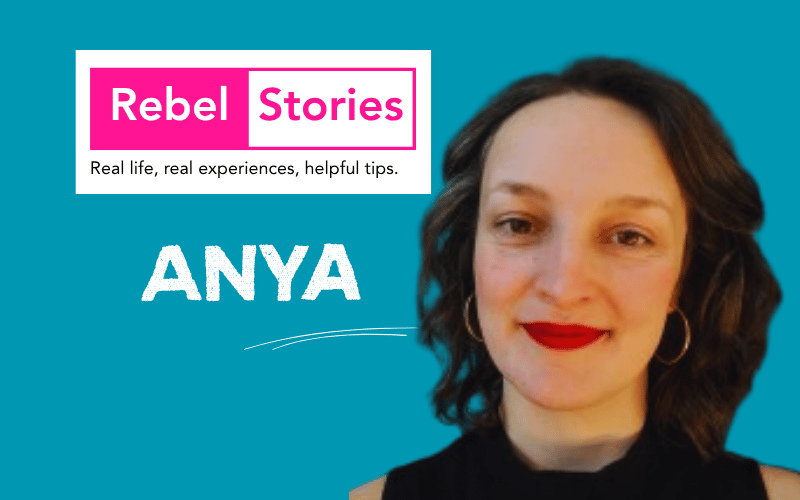
Anya’s story is about the gap between an organisation’s values and behaviours, and the cost of holding a mirror up to an invisible hierarchy. What made her experience particularly difficult is that the organisation itself was quietly recreating the unequal power structures of the systems it supposedly dismantling, and by highlighting this, Anya was vilified.
What’s striking is that Anya resists the temptation to frame this as a story around a problematic individual, despite encountering one. She frames it as evidence of how deeply a system can be embedded in the very people trying to dismantle it; how an organisation can talk fluently about dignity and flat hierarchies while one of its leaders quietly protects their own position. “It just shows how difficult it can be to create change“, she reflects.
Our conversation made me reflect on how moral courage inside ‘good’ organisations can risk repercussions, because the organisation’s self-image makes the person raising an issue look like the problem.
What does the term ‘moral rebel’ mean to you?
“I find it a really difficult term to feel okay with, I don’t feel like I’m being a rebel. I feel like I’m just doing what it means to be a human”. Anya points out the incongruence of kindness and honesty being seen as rebellious, highlighting how human decency isn’t considered the norm. Sensitive to injustice, she holds herself to a high moral standard and sees being a moral rebel as simply what it means to be a good human:
· being kind,
· staying open to learning “without assuming you’re the expert“,
· being honest, and
· looking after yourself.
What’s your experience of being a moral rebel?
Anya works in the voluntary sector, supporting human rights, community decision-making, accessibility & inclusion advocacy. Several years ago, she was headhunted into a small, values-driven organisation built explicitly around ‘system change’ and a flat, ‘policy light’ hierarchy. It seemed a perfect opportunity. What she found, however, was an invisible hierarchy and gender pay gap, despite the claim that everyone was equal. Unable to ignore the gap between espoused values and reality, Anya highlighted this.
She raised her concerns for the best part of a year, refusing to accept that women were being paid less than men in the same role. Her persistence paid off, and the pay gap closed. But this proved temporary, as the disparity soon reappeared. Yet again, Anya found herself the only person willing to challenge this. “I really don’t want to be the one saying this,” she told her team, “but I do know I’m alone in saying it out loud, because no one else would.” She exposed the organisation’s invisible hierarchy using a non-judgemental approach, grounding her argument around the irony that current systems and structures & power imbalances are so ingrained that even their organisation was unknowingly replicating them. This wasn’t well received.
Have you faced consequences, backlash or retaliation?
“I was vilified”. Like so many moral rebels find, after standing up for what is right and highlighting an issue, Anya told me that “I spent a long time thinking I was the problem“.
While on maternity leave and supporting a close friend through a significant crisis, she learned that some of organisation’s directors were discussing easing her out. Told to her face that she was causing harm, Anya’s longstanding mental health issues worsened and she wasn’t appropriately supported. “The hierarchy didn’t shift at all. I ended up leaving, and ended up having my confidence really knocked“.
What helped?
Discovering she wasn’t alone: other people, inside and outside the organisation, had experienced the same pattern with the same person. “That’s helped me to see that I wasn’t wrong to try”. Through our discussion, Anya realised that while she can struggle with emotional resilience, “I feel like I’ve got moral resilience in bucket loads”.
What advice would you give other moral rebels?
Keep going, but don’t do it alone. “Lean on other moral rebels” and accept that changing systems “is never going to be easy”. Asked if she’d do it again, she replied without hesitation “I would absolutely do it again”, surprising herself by saying this for the first time out loud.
____________________________________________________________________________
I was moved by Anya’s integrity and compassion. Grounded in community, connection and inclusion, she’s morally courageous and an inspiring example of recovery from backlash. “It’s also been foundational to what I’m doing now, and that feels really great... and I probably wouldn’t be doing this [her business] had I not gone through the challenges with trying to stand up and say what felt important“.
Anya may be uncomfortable with the term ‘moral rebel’, but she certainly is one.